



ICE ICE Baby: Detention and Deportation in Trump’s Egregiously Wretched Immigration Policies

Smith examines Trump’s second-term immigration campaign, including unprecedented levels of detention, rising deaths in custody and third-country deportations to African states. She argues that Washington is now conscripting Africa as a deportation warehouse and urges transparency and continuing continental litigation and solidarity against these practices.
The ICE acronym for the U.S. Immigration and Customs Enforcement agency projects an image of mass detention and deportation in the United States, which has expanded at a scale that the system can no longer manage without exporting or, if all else fails, killing some of the people it has detained. Border containment is a grammar of western immigration rules, and the machinery of immigration enforcement stretches beyond the United States. Donald Trump’s second-term immigration regime perfects the logic of Europe’s externalization of migration management onto African states. Thus, the reach of Europe and the United States extends beyond airports and oceans, into militarized detention camps and other holding facilities in Africa and globally.
States do have the right to control their borders and to remove people who have no legal right to remain in their territories, and citizens of affluent countries, with high anxiety about the migrant, demand immigration enforcement. However, while managing these sovereign rights, states are also mandated by international law to respect due process and prohibitions against torture and inhumane treatment.
The Conditions for Deportation and Detention
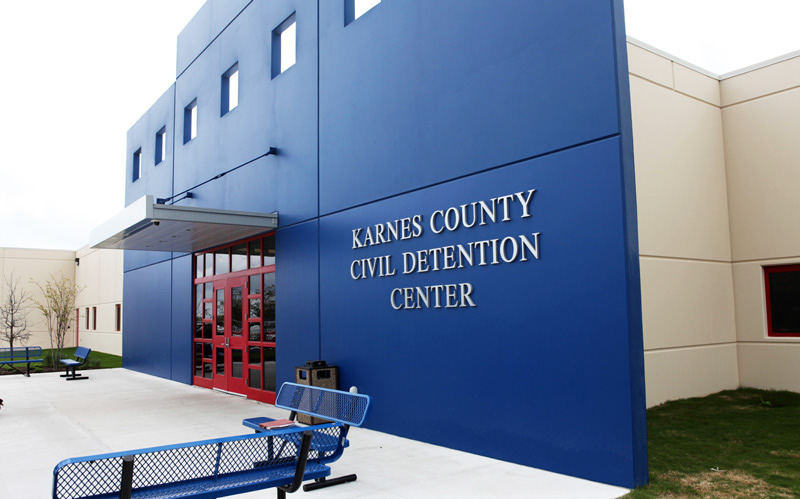
In August 2025, the Trump administration committed to implementing the largest deportation operation in U.S. history, with annual deportations to exceed one million people.[1] The administration continues to expand its detention machinery to meet its deportation objectives. It is acquiring warehouses to hold as many as 96,000 people, a capacity that will bring continued abuse of detainees.[2] The hub-and-spoke model of mega-detention centers and regional facilities range from 500 beds to centers that can hold up to 10,000 at one time.[3] In April 2026, U.S. Senate Republicans campaigned to give ICE and Customs and Border Protection (CBP) up to $140 billion in funding, in addition to more than $103 billion the two agencies had already secured.[4] The ICE fiscal year 2027 budget includes $5.4 billion to sustain enforcement and removal operations, which includes support for 41,500 detention beds.[5]
In fiscal year 2026, ICE removed 356,389 people (and counting) out of the U.S.[6] The U.S. government argues that this behemoth targets criminals. According to Representative Chip Roy, who represents Texas’ 21st congressional district, however,
“every arrest matters… All immigration lawbreakers should be subject to detention, deportation proceedings, and removal, regardless of whether they have been charged or convicted of non-immigration crimes or pose a safety threat. In other words, economic (unauthorized migrants) who may not have committed additional criminal violations after entering the U.S. unlawfully should also be a top removal priority, as they comprise the majority of the unauthorized population.”[7]
ICE reports that in 2026, 31% of its detainees had criminal convictions, 32% had pending criminal charges, and 36% had other immigration violations.[8] But these same statistics show that 68% of ICE detainees had no criminal conviction or faced charges that had not been proven. Thus, the U.S. detention system criminalizes and punishes people before a court can find them guilty of a crime, although legally, a person facing a criminal charge is presumed innocent until proven guilty.
ICE reported the deaths of 24 detainees from January to August 2026, approximately 3 deaths each month, exceeding 21 reported deaths for 2025.[9] Starkly conflicting with ICE statistics, the American Civil Liberties Union reports that by April 2026, the death rate among detainees had reached approximately one death every six days, and more than forty people had died since the 2025 start of Trump’s mass deportation campaign, representing the highest number of deaths in detention, albeit recorded over a short period.[10] Many of these deaths are linked to medical neglect, including four deaths at California’s Adelanto Processing Center.[11]
The Department of Homeland Security disputes that the current death rate is atypical. It claims that the death rate is 0.009 percent of the detained population and that detainees receive access to medical care. In 2026, the acting ICE director, Todd Lyons, attributed the high death toll to the fact that more people are in detention than at any point since the agency was created in 2003.[12] Lyons’ arithmetic actually indicts the administration. If deaths increase in proportion to the number of people detained, then the expansion of detention becomes a cause of death. Even as the detention infrastructure has grown and deaths in detention reached record levels, oversight of the system lessened with closure of the Office of the Immigration Detention Ombudsman by the Department of Homeland Security.[13]
These mortality statistics show what the administration of the wretched looks like. Wretchedness is a political category for people placed outside of the communities of those whose lives count, and the wretched are accordingly detained and deported. The wretched exist in a zone of non-existence, a place where the racialized person is not recognized as fully human.[14] [15] Necropolitics defines the politics that decides who may live and who is exposed to death (the wretched), and the processes of managing the wretched.[16] People deported from the U.S. and detained in African warehouses, military camps, and prisons, can be counted among the wretched, a condition that may become permanent. The necropolitical detention regime categorizes people into those whose deaths matter and will be investigated and those whose deaths do not matter and may or may not be reported.
Enter Africa: Externalization of Border Regimes
Based on the principle of non-refoulement, the United States cannot legally send people back to countries where they face torture or persecution. To circumvent this international prohibition, the U.S. has turned to third-country deportation. From January 2025 to August 2026, the United States deported more than 500 people to African countries that were not their countries of origin.[17] As of October 2026, more than 25,000 people had been deported to at least 30 countries. The U.S. government has pursued agreements with more than 30 countries, and most of these agreements have not been made public.[18]
African governments are central to these third-country arrangements and are being paid in money or in other concessions, to hold people expelled from the U.S. and Europe. Burundi, Cameroon, Cape Verde, the Democratic Republic of Congo, Equatorial Guinea, Eswatini, Ghana, Liberia, Rwanda, Sierra Leone, South Sudan, Uganda and the Central African Republic have signed removal agreements with the U.S.[19] In a one-year agreement that can be renewed, Eswatini agreed to accept 160 deported people in exchange for $5.1 million for its border and migration management capacity.[20] In agreements with the U.S. to accept deported people, Equatorial Guinea received $7.5 million and Ghana secured visa concessions. Ghana functions primarily as a transit and processing point for onward deportation or transfer of deportees to their country of origin or to another third country.[21] In April 2026, Uganda began receiving deported people, although it is not known what the country received in return.[22]
Once again, the U.S. administration’s stated justification for third-country deportation is that those who are sent are dangerous criminals. The White House stated that the men deported to Eswatini in October 2025 had been convicted of serious violent crimes, including murder and sexual assault.[23] But conviction does not remove a person’s right to protection from torture. Further, the record shows that the arrangement extends beyond the convicted. The Eswatini authorities have stated that the objective of the agreement is to facilitate the eventual repatriation of people who were deported to their countries of origin, which constitutes chain refoulement.[24]
People sent to Eswatini, Ghana and South Sudan were arbitrarily detained and ill-treated. Further, violating the principle of non-refoulement that is fundamental to the 1951 Refugee Convention and the Convention against Torture, Cameroon, Equatorial Guinea and Ghana sent people to their home countries, where they risk persecution or torture.[25] This sending is part of the chain refoulement these countries agreed to with the U.S. In September 2025, eleven people were held in poor conditions for approximately two weeks at the Bundase military camp in Ghana, and were then forcibly transferred to Togo.[26] By August 2026, nineteen men were held in long-term detention in Eswatini and six or seven in South Sudan.[27]
The coloniality of border containment means that some bodies are free to move, while others are caged and cargoed. Europe externalizes migration by funding African border guards who prevent migrants from reaching the Mediterranean. The United States externalizes migration by purchasing African detention capacity, so that people are removed out of the U.S. after they have been detained in the U.S. For both Europe and the United States, African territory and African sovereignty exist to absorb the consequences of their migration anxieties. Without addressing the structural conditions that drive irregular migration, these approaches may slow (rather than stop) migration, contribute to human smuggling, and further the abuse and penalization of migrants. In this arrangement, African countries become commodities that are traded without the consent of African people, as their governments consent to participate in this carceral system in exchange for less restrictive tariffs, visa regulations, and aid conditions.
In February 2026, the United States District Court for the District of Massachusetts ruled that deportations to third countries were unlawful and must be stopped. However, the U.S. Supreme Court had earlier lifted restrictions that limited deportations,[28] and deportations continued, including to Eswatini.[29] At the same time, the Trump Administration continues to circumvent rulings it considers to be adverse. With their control of Congress based on the mid-term elections, Democrats may have the capacity to limit future spending for ICE, demand investigations and report abuses. There are many unknowns, as Democrats remain divided on these issues and do not have a veto-proof majority. Irrespective of what the U.S. Congress decides, refusals to participate can come from Accra, Mbabane, Kampala and Addis Ababa; from African parliaments and courts, and not from Capitol Hill.
The African Union has not articulated a position on the reception of third-country nationals in African countries. While it has promoted free movement within the continent, its member states are privately negotiating to receive people deported from outside the continent. African governments have neither published nor submitted their third-country agreements for judicial review. Without the prior knowledge of their citizens, these governments have accepted the continent’s designation as a warehouse for this project and have accepted cash payments or traded favors to take part in this global immigration enforcement. Human beings caught in this wretched carceral system become a category of people whose suffering can be procedurally justified.
African courts and civil society have mounted serious resistance to these egregious practices. In 2025, Democracy Hub, a civil society group in Ghana, filed a lawsuit with the Supreme Court of Ghana to challenge third-country and externalized U.S. deportation agreements.[30] In Eswatini, activists legally challenged its secretive agreement with the U.S. In December 2025, lawyers filed a complaint over the detention of three deported men with the African Commission on Human and Peoples’ Rights, which the Commission agreed in March 2026 to hear.[31] In April 2026, following approximately nine months of litigation, the Supreme Court of Eswatini ruled that people who were deported have the right to legal counsel.[32] In April 2026, the Uganda Law Society issued a statement that it had approached the courts in Uganda to stop the deportation of people from the U.S. to Uganda.[33] In June 2026, a coalition of lawyers filed a lawsuit at the ECOWAS Court of Justice in Abuja on behalf of 27 people from among at least 60 people deported to Ghana from the U.S. since 2025. The suit requests that the Court forces Ghana to disclose its agreement with the U.S. and to stop accepting people deported.[34] [35]
These victories and legal push-backs show that African people, legal institutions, and civil society are refusing to accept the role that deportation regimes assign to them. These victories point to a continental jurisprudence that protects the rights of people regarding third-country removals, which could outlast the Trump administration.
Danielle Taana Smith is a Professor in the Department of African American Studies and Professor of Sociology (courtesy) in the Maxwell School of Citizenship and Public Affairs at Syracuse University. Her research engages in global policy issues with an overarching goal of improving the social and economic environment for all, especially those at the margins of our society.
Endnotes
[1] The White House. August 13, 2025. America First in Action: Deportations Surge, Jobs Return, D.C. Gets Tough. https://www.whitehouse.gov/releases/2025/08/america-first-in-action-dep…
[2] Gassama, Haddy. April 28, 2026. Deaths in Detention: ICE Is Rapidly Expanding Detention Camps into Warehouses Despite Record Deaths. American Civil Liberties Union. https://www.aclu.org/news/immigrants-rights/deaths-in-detention-ice-is-…
[3] Ibid
[4] United States Senate Committee on the Budget. April 22, 2026. As Senate Republicans Move to Give ICE, CBP up to $140 Billion, Data Emerges Showing the Agencies Sitting in over $100 Billion from Previous Reconciliation Bill. https://www.budget.senate.gov/ranking-member/newsroom/press/as-senate-r…
[5] U.S. Department of Homeland Security. April 16, 2026. Testimony of Todd M. Lyons on The Fiscal Year 2027 Budget for the U.S. Immigration and Customs Enforcement Agency. https://docs.house.gov/meetings/AP/AP15/20260416/119149/HHRG-119-AP15-W…
[6] U.S. Immigration and Customs Enforcement. 2026. Detention Management. https://www.ice.gov/detain/detention-management#stats
[7] Roy, Chip. October 26, 2026. Letter to the Honorable Markwayne Mullin, Secretary, U.S. Department of Homeland Security. U.S. Congress. https://roy.house.gov/sites/evo-subsites/roy-evo.house.gov/files/evo-media-document/dhs_interior-enforcement_followup_letter.pdf
[8] U.S. Immigration and Customs Enforcement. 2026. Detention Management. https://www.ice.gov/detain/detention-management#stats
[9] U.S. Immigration and Customs Enforcement. 2026. Detainee Death Reporting. https://www.ice.gov/detain/detainee-death-reporting
[10] Gassama, Haddy. April 28, 2026. Deaths in Detention: ICE Is Rapidly Expanding Detention Camps into Warehouses Despite Record Deaths. American Civil Liberties Union. https://www.aclu.org/news/immigrants-rights/deaths-in-detention-ice-is-…
[11] California Department of Justice, 2026. Immigration Detention in California: A Review of Conditions of Confinement. https://oag.ca.gov/system/files/media/immigration-detention-2026.pdf
[12] NPR. April 17, 2026. Deaths of Migrants in ICE Custody Hit Record High Under Trump. https://www.npr.org/2026/04/17/nx-s1-5789092/deaths-of-migrants-in-ice-custody-hit-record-high-under-trump
[13] Office of the New York Attorney General. May 19, 2025. Attorney General James Urges Federal Court to Keep U.S. Department of Homeland Security’s Civil Rights Offices Open. https://ag.ny.gov/press-release/2025/attorney-general-james-urges-feder…
[14] Fanon, Frantz. 2004. The Wretched of the Earth. Translated by Richard Philcox. New York: Grove Press.
[15] Fanon, Frantz. 2008. Black Skin, White Masks. Translated by Richard Philcox. New York: Grove Press.
[16] Mbembe, Achille. 2003. Necropolitics. Public Culture 15 (1): 11-40.
[17] Human Rights Watch. October 8, 2026. ‘To Scare People’: US Expulsions of Third-Country Nationals to Countries in Africa. https://www.hrw.org/report/2026/10/08/to-scare-people/us-expulsions-of-…
[18] U.S. Committee for Refugees and Immigrants. 2026. Third Country Deportations Tracker. https://refugees.org/tcdtracker/
[19] Amnesty International. August 5, 2026. African States Must Refuse to Be Complicit with the USA’s Policy of ‘Third Country Removals’. https://www.amnesty.org/en/latest/news/2026/08/tribune-politique-americ…
[20] U.S. Committee for Refugees and Immigrants. 2026. Third Country Deportations Tracker. https://refugees.org/tcdtracker/
[21] Global Strategic Litigation Council. June 30, 2026. Landmark Lawsuit Challenges Ghana for Rights Violations and Complicity in US Deportation Scheme Removing Refugees and Protected Persons to Countries Where They Face Persecution. https://www.global-council.org/blog-and-news/blog/landmark-lawsuit-chal…
[22] Externalizing Asylum. April 1, 2026. The United States’ Attempt to Deport Third Country Nationals to Africa: Is This a Mutually Beneficial Situation? https://externalizingasylum.info/the-united-states-attempt-to-deport-th…
[23] Axios. October 6, 2025. 10 More Migrants Sent to Eswatini as Part of U.S.’ Third-Country Deportation Agreement. https://www.axios.com/2025/10/06/us-deportation-eswatini
[24] U.S. Committee for Refugees and Immigrants. 2026. Third Country Deportations Tracker. https://refugees.org/tcdtracker/
[25] Human Rights Watch. October 8, 2026. ‘To Scare People’: US Expulsions of Third-Country Nationals to Countries in Africa. https://www.hrw.org/report/2026/10/08/to-scare-people/us-expulsions-of-…
[26] Amnesty International. August 5, 2026. African States Must Refuse to Be Complicit with the USA’s Policy of ‘Third Country Removals’. https://www.amnesty.org/en/latest/news/2026/08/tribune-politique-americ…
[27] Novo Legal Group. 2026. Third-Country Deportation: The Practice & the Law. https://www.novo-legal.com/en/immigration-law/third-country-deportations
[28] U.S. Congress. October 23, 2026. Immigration Removals to Third Countries. Library of Congress. https://www.congress.gov/crs-product/IF13295
[29] U.S. Committee for Refugees and Immigrants. 2026. Third Country Deportations Tracker. https://refugees.org/tcdtracker/
[30] The African Portal. October 14, 2025. Ghana Rights Group Challenges Secret US Deportee Deal in Supreme Court. https://theafricanportal.com/2025/10/14/ghana-rights-group-challenges-secret-us-deportee-deal-in-supreme-court/
[31] Novo Legal Group. 2026. Third-Country Deportation: The Practice & the Law. https://www.novo-legal.com/en/immigration-law/third-country-deportations
[32] Ibid.
[33] Uganda Law Society. April 2, 2026. Another Fine Mess: USA - Uganda Dehumanizing Deportation Agreement Challenged in Court. https://uls.or.ug/another-fine-mess-usa-uganda-dehumanizing-deportation-agreement-challenged-in-court/
[34] Global Strategic Litigation Council. June 30, 2026. Landmark Lawsuit Challenges Ghana for Rights Violations and Complicity in US Deportation Scheme Removing Refugees and Protected Persons to Countries Where They Face Persecution. https://www.global-council.org/blog-and-news/blog/landmark-lawsuit-challenges-ghana-for-rights-violations-and-complicity-in-us-deportation-scheme-removing-refugees-and-protected-persons-to-countries-where-they-face-persecution
[35] The Africa Report. June 30, 2026. Ghana Sued Over Trump Deportation Deal in ECOWAS Court Case. https://www.theafricareport.com/423419/ghana-sued-over-trump-deportation-deal-in-ecowas-court-case/